


There are places on this earth whose beauty and grandeur have no words. There is nothing you could do to imagine or envision a place like this, it can only exist as it is, and be experienced. These places serve humanity by the magnitude of awe they produce inside of our bodies and minds. The sheer physical form and existence of it leaves us with the impression that only God could create it. It is precisely that feeling and thought that opens the door into the spiritual realm.
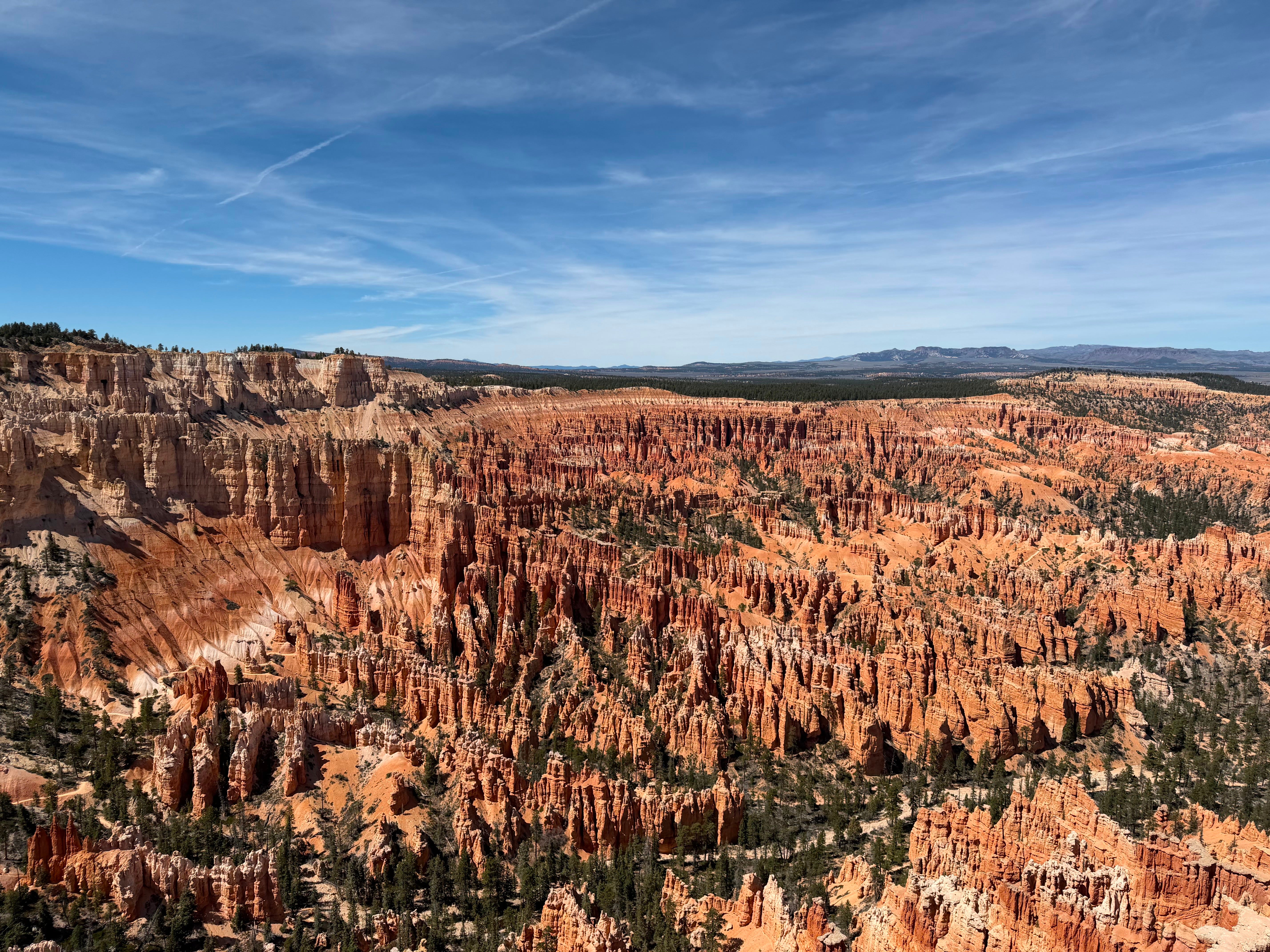
Bryce Canyon in southern Utah is one of those places. Long before the Mormons settled the area and named it after Ebenezer Bryce, it’s first homesteader, the native people lived off the land for 10,000 years. The Paiute people themselves had two distinct names for it – a descriptive name and a spiritual name.
Unka-timpe-wa-wince-pock-ich: red rocks standing like men in a bowl shaped recess
Anka-ku-was-a-wits: red painted faces
The spiritual name comes from an origin legend where the Paiute believed the hoodoos (their word was Oo’doo - something that implies fear) were “Legend People” called To-when-an-ung-wa who were turned into stone by the powerful Coyote spirit. The legend describes these beings as creatures of many kinds who had done something wrong, and thus the Coyote spirit punished them by petrifying them where they stood.
“You can see their faces, with paint on them, just as they were before they became rocks.” Is what the sign in the park says.
It’s a nice simple story for the 2.5 million annual visitors to digest, but there is something deeper to explore.
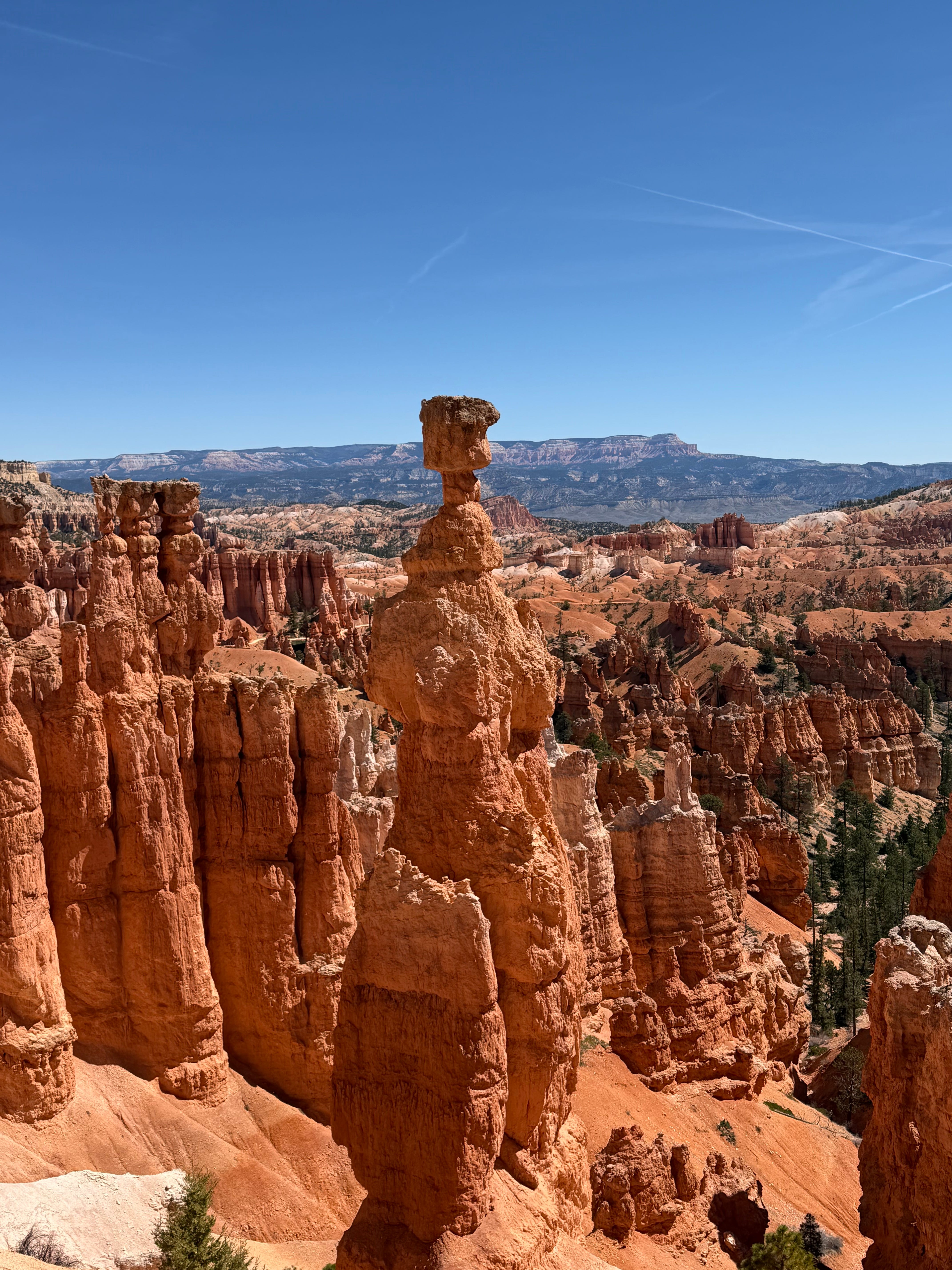
The Legend People, To-when-an-ung-wa, were not human. They were shape-shifters, able to take many forms—birds, animals, other beings—and to appear as people. The red paint on their faces was not a disguise. For the Paiute, and for many Native traditions, red signified power, beauty, and presence. It marked a state of full expression, a kind of completion. To wear it was to stand in a realized identity.
The legend does not dwell on a specific act. It suggests something like conflict or theft, but leaves it uncertain. The lack of detail is part of the meaning. These were beings of open possibility, capable of becoming anything, who chose to inhabit the form of personhood while remaining unsettled within it.
Coyote, Sinawava, stands in contrast to them. He is the younger brother of Wolf, Esa, the creator god. Where Wolf brings order and builds the world carefully, star by star, Coyote disrupts. He grabs the stardust and spills the stars across the sky, forming the Milky Way. He is impulsive, unpredictable, and often careless. A trickster or rascal of the highest order. Yet he is not outside the order of things. He belongs to it. He is not evil in the moral sense; he is part of the structure of the world.
Coyote represents a different kind of force. He is creative, but not controlled. He pushes against limits. He discovers things and brings them to humans. Fire and daylight are attributed to him. He is also tied to art, to the human impulse to create and to test boundaries. His actions often produce disorder, but they also expand what is possible. Anthropologist Claude Lévi-Strauss described Coyote as a figure who mediates between opposites, especially between life and death, because he operates between them.
This role becomes clear in the story of death. Wolf had the power to revive the dead and did so repeatedly. Coyote argued that this could not continue, that the world would not sustain it. Eventually, Wolf agreed. Not long after, Coyote’s own son died from a snakebite. Coyote went to Wolf and begged him to restore his son to life.
Wolf refused, answering only, “You said so yourself.”
From that point forward, death became permanent. Coyote was the first to experience the consequence of the rule he had insisted on. He could not step outside it. This matters because it establishes his position. He does not judge from a distance. He is subject to the same conditions he enforces.
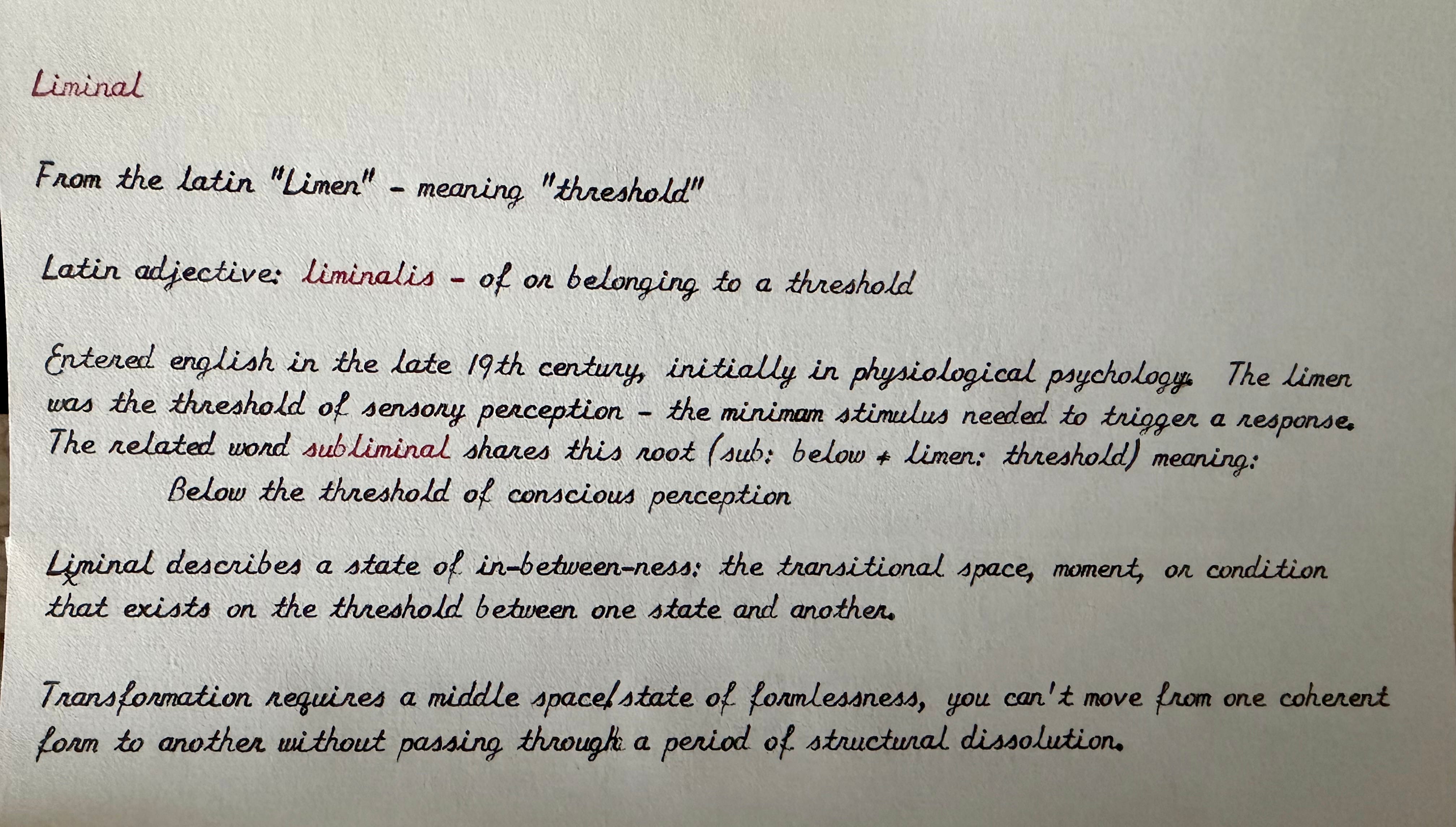
Coyote understands what it means to exist between states. He occupies that liminal space himself. He knows the tension of it, and he knows what is lost when that openness is forced into a fixed form.
When he turns the Legend People to stone, he is not destroying them. He is not sending them elsewhere. Instead, he gives them exactly what they were taking for themselves. They had chosen to present themselves as fully realized persons at the peak expression of that form. They wore that identity without accepting its weight.
Coyote makes it permanent. He freezes them in that moment, in that form, red faces intact. He turns their performance into reality and their reality into stone.
The wrongdoing of the Legend People wasn’t the fighting or stealing or whatever it was. It was that they were creatures of pure fluidity, who could become ANYTHING, and chose to inhabit the fully realized human form and acted badly while doing so. They had the power of infinite becoming and they used it to borrow an identity and behave as though consequences did not apply to them.
Coyote, who has never escaped a single consequence in his existence, found that transgression to be intolerable.
What remains is the lesson. Thousands of red-faced figures standing in that unspeakable amphitheater of nature, frozen in time and space at the height of their pretending, as a museum of ambiguity. The Paiute understood that personhood is not a costume. It’s a gift and a reckoning. It is something you earn through commitment and consequence and a willingness to find your true self and be strong in it even when fluidity would be easier.
Every person who has ever approached that canyon rim and walked out to sunrise or sunset point and looked out in awe over the hoodoos has stood at the altar of God, at one of his Temples. His teaching right there, enshrined in the red rocks. Sinawava made sure of it.


Woah ... we've been bringing our boys here for 10 years and I never knew this story. Thank you for the new lens that I will have with me next time I go!
✨️ "He turns their performance into reality and their reality into stone." ✨️